
In today’s digital age, where cyber threats are a constant concern, understanding the role of a Security Operation Centre (SOC) is essential. A SOC acts as the frontline defence against cyber attacks, providing a structured approach to monitoring, detecting, and responding to security incidents. This article explores the various aspects of a SOC, from its core responsibilities to the challenges it faces, and highlights its importance in maintaining robust cybersecurity for organisations.
Key Takeaways
- A Security Operation Centre (SOC) is crucial for real-time monitoring and response to cyber threats.
- SOC teams consist of skilled professionals who analyse security data and manage incidents.
- Key tools used in a SOC include SIEM, IDS, and EDR for effective threat detection and management.
- Challenges for SOCs include limited resources, skill shortages, and the ever-changing nature of cyber threats.
- Implementing a SOC can lead to improved incident response, better risk management, and cost savings for organisations.
Defining The Security Operation Centre
Overview of SOC Functions
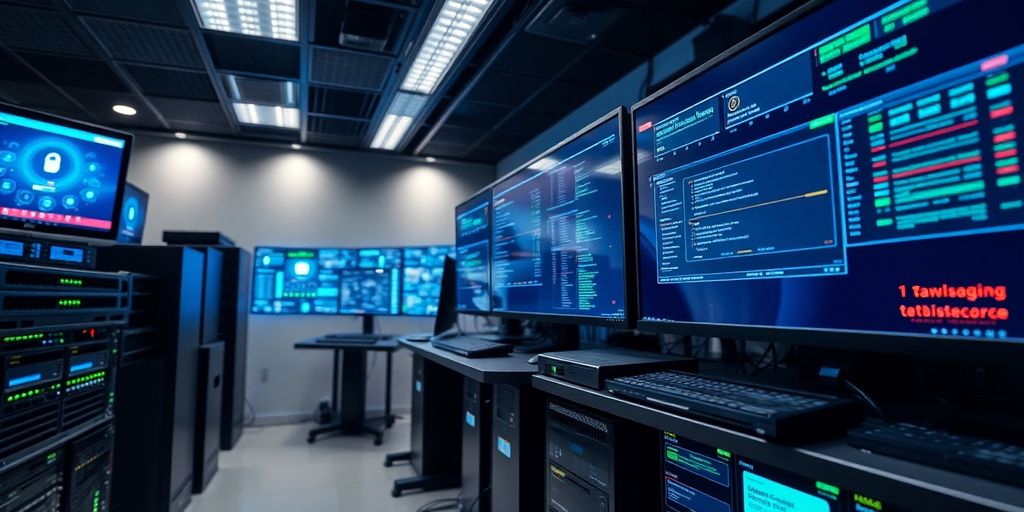
So, what exactly is a Security Operation Centre, or SOC? Think of it as your organisation’s cybersecurity command centre. It’s a dedicated team responsible for monitoring, analysing, and responding to security incidents. They’re the folks who keep an eye on things 24/7, looking for anything suspicious that could harm your data or systems.
- Continuous monitoring of networks and systems.
- Analysing security events to identify potential threats.
- Responding to and mitigating security incidents.
A SOC isn’t just about reacting to problems; it’s about proactively hunting for threats and improving your overall security posture. They’re constantly learning and adapting to the ever-changing threat landscape.
Key Components of a SOC
A SOC isn’t just a room full of people staring at screens (though there’s some of that!). It’s a combination of people, processes, and technology working together. You need skilled analysts, well-defined procedures for handling incidents, and the right tools to get the job done. Key components include:
- The Team: Skilled security analysts, incident responders, and threat intelligence experts.
- Technology: SIEM systems, intrusion detection systems, and endpoint detection and response tools.
- Processes: Incident response plans, vulnerability management programmes, and security awareness training.
Importance of SOC in Cybersecurity
In today’s world, cybersecurity threats are more sophisticated and frequent than ever before. A SOC provides a crucial layer of defence, helping organisations to:
- Detect and respond to threats quickly and effectively.
- Minimise the impact of security incidents.
- Improve their overall security posture.
Without a SOC, organisations are much more vulnerable to cyberattacks and data breaches. It’s like trying to defend your house without locks on the doors – you’re just asking for trouble.
Core Responsibilities of The Security Operation Centre

Continuous Monitoring
SOCs are the ever-vigilant eyes of an organisation’s digital world. They provide 24/7 monitoring of networks, systems, and applications to detect suspicious activity. This constant watch involves analysing logs, traffic patterns, and data from various security tools like firewalls and intrusion detection systems. The goal? To spot malware, unauthorised access attempts, or any other signs of a security breach, and to do it fast.
Incident Response Protocols
When a security incident occurs, the SOC jumps into action. It’s not just about detecting the problem; it’s about containing it and minimising the damage. The incident response process typically involves:
- Identification: Pinpointing the nature and scope of the incident.
- Containment: Isolating affected systems to prevent further spread.
- Eradication: Removing the threat from the environment.
- Recovery: Restoring systems to normal operation.
- Post-Incident Activity: Analysing the incident to improve future responses.
The SOC’s incident response team works to restore IT services as quickly as possible after a security incident. They develop and implement remediation plans to mitigate any associated risks and to prevent similar incidents from happening again.
Threat Intelligence Gathering
Staying ahead of cyber threats requires more than just reacting to attacks. It means proactively gathering and analysing threat intelligence. This involves:
- Monitoring industry trends and emerging attack vectors.
- Analysing threat intelligence feeds from various sources.
- Conducting risk assessments to identify vulnerabilities.
- Developing and implementing new security strategies based on the latest intelligence.
By understanding the threat landscape, the SOC can better anticipate and prevent attacks before they happen. It’s like knowing what the enemy is planning before they even make a move.
Essential Tools Utilised by The Security Operation Centre
SOCs are like the mechanic shops of the cyber world, but instead of spanners and sockets, they use fancy software. These tools are what allow them to see, understand, and react to threats. Without them, it’s like trying to fix a car with your bare hands – messy and ineffective.
Security Information and Event Management (SIEM)
SIEM systems are the big data brains of the SOC. They collect logs and event data from all over the network – servers, firewalls, applications, you name it. Then, they crunch all that data to find patterns and anomalies that could indicate a security problem. Think of it as a super-powered search engine for security threats. It’s not perfect, but it’s way better than manually sifting through logs. A good SIEM can make a huge difference in spotting something nasty before it does real damage.
Intrusion Detection Systems (IDS)
IDS are like the security guards at the gate, constantly watching network traffic for suspicious activity. They use rules and signatures to identify known threats, and some even use fancy behaviour analysis to spot things they haven’t seen before. When they see something dodgy, they raise an alarm. The downside? They can be a bit noisy, throwing out false positives that waste the analysts’ time. Still, they’re a crucial layer of defence.
Endpoint Detection and Response (EDR)
EDR tools are installed on individual computers and servers (the ‘endpoints’) to monitor what’s happening on those machines. They can detect malicious activity, like malware infections or suspicious processes, and then respond to contain the threat. EDR is like having a personal bodyguard for each of your devices. It gives you much better visibility into what’s happening at the endpoint level, which is where a lot of attacks start. It’s a must-have in today’s threat landscape.
Having the right tools is only half the battle. You also need skilled people who know how to use them. A SOC with the best tools but no trained analysts is like having a Formula 1 car with no driver. It looks impressive, but it’s not going anywhere fast.
Challenges Faced by The Security Operation Centre
Resource Allocation
Setting up and running a Security Operations Centre (SOC) can be a real drain on resources. It’s not just about the initial investment in fancy security tools; it’s the ongoing costs that can really add up. You’ve got to think about things like software licences, hardware maintenance, and, of course, the cost of skilled personnel. For smaller businesses, this can be a major hurdle. It’s a constant balancing act to make sure you’re getting the most bang for your buck without compromising security.
Skill Shortages in Cybersecurity
Finding and keeping qualified cybersecurity professionals is a massive headache. There just aren’t enough skilled analysts to go around, and the demand is only increasing. Everyone’s after the same talent, so you end up in bidding wars or watching your best people get poached by bigger companies. This shortage can leave your SOC understaffed and overworked, which obviously isn’t ideal when you’re trying to protect against constant threats.
Evolving Threat Landscape
The world of cyber threats is constantly changing, and it feels like we’re always playing catch-up. New attack methods are popping up all the time, and it can be tough to keep your SOC prepared for everything. What worked last year might be completely useless against the latest ransomware strain. It requires constant learning, updating of security protocols, and a proactive approach to threat intelligence. It’s a never-ending cycle of adaptation, and it can be exhausting trying to stay one step ahead.
Keeping up with the evolving threat landscape requires a commitment to continuous learning and adaptation. SOC teams need to stay informed about the latest threats, vulnerabilities, and attack techniques. This involves subscribing to threat intelligence feeds, attending industry conferences, and participating in training programmes. By staying ahead of the curve, SOC teams can better protect their organisations from emerging threats.
Benefits of Implementing A Security Operation Centre
Enhanced Incident Response
Having a Security Operation Centre (SOC) really changes how quickly and effectively you can deal with security incidents. Instead of scrambling when something goes wrong, you’ve got a dedicated team ready to jump into action. They’re already familiar with your systems, they know the protocols, and they’ve got the tools to contain and resolve issues fast. This means less downtime, less data loss, and less stress for everyone involved.
Improved Risk Management
A SOC isn’t just about putting out fires; it’s also about preventing them in the first place. By constantly monitoring your systems and networks, a SOC can identify vulnerabilities and potential risks before they’re exploited. This proactive approach to risk management helps you stay ahead of threats and protect your valuable assets. It’s like having a security guard who’s always on patrol, spotting potential problems before they become real headaches.
Cost Efficiency and Savings
Okay, setting up a SOC costs money, no doubt about it. But think about the alternative: dealing with a major data breach or ransomware attack. The costs associated with those incidents – lost revenue, legal fees, reputational damage – can be astronomical. A SOC helps you avoid those disasters, saving you money in the long run. Plus, by automating some security tasks, a SOC can free up your IT staff to focus on other important projects. It’s an investment that pays off, big time.
A SOC provides a centralised view of your security posture, allowing for better decision-making and resource allocation. This means you can focus your security efforts where they’re needed most, maximising your return on investment and minimising your overall risk.
Key Team Members in The Security Operation Centre
SOC Manager
The SOC Manager is basically the captain of the ship. They’re in charge of the whole SOC team, making sure everything runs smoothly, and reporting back to the CISO (Chief Information Security Officer). They handle resource allocation, team performance, and the overall effectiveness of the SOC. Think of them as the person who keeps all the plates spinning, ensuring everyone knows what they’re doing and that the SOC is meeting its objectives. They’re also responsible for developing and implementing security strategies and policies.
Incident Response Analysts
These are your first responders when things go wrong. Incident Response Analysts are the ones who jump into action when a security alert pops up. They investigate the alert, figure out if it’s a real threat, and then take steps to contain and eliminate it. They’re like the detectives of the cybersecurity world, piecing together clues to understand what happened and how to stop it from happening again. They need to be quick thinkers, problem solvers, and able to stay calm under pressure. They often work in tiers, with Tier 1 analysts handling initial assessments and Tier 2 analysts tackling more complex incidents.
Threat Intelligence Analysts
Threat Intelligence Analysts are all about staying ahead of the game. They spend their time researching the latest threats, vulnerabilities, and attack techniques. They gather information from various sources, analyse it, and then provide insights to the rest of the SOC team. This helps the team understand what to look out for and how to defend against emerging threats. They’re like the scouts, constantly scanning the horizon for potential dangers. Their work is crucial for proactive threat detection and preventing attacks before they even happen.
A good SOC team is like a well-oiled machine. Each member has a specific role to play, and they all need to work together seamlessly to protect the organisation from cyber threats. Without a strong team, even the best technology is useless.
Future Trends in Security Operation Centres
Integration of AI and Machine Learning
SOCs are starting to use AI and machine learning more and more. This helps them find threats faster and more accurately than humans can alone. AI can analyse huge amounts of data to spot patterns that might indicate an attack. It’s like having a super-powered assistant that never sleeps. This tech can also automate some of the more boring tasks, freeing up analysts to focus on the tricky stuff.
Automation in Threat Detection
Automation is becoming a big deal in SOCs. Instead of doing everything manually, security teams are using tools to automate tasks like:
- Analysing logs
- Blocking suspicious IP addresses
- Isolating infected systems
Automation helps SOCs respond to incidents faster and more efficiently. It also reduces the risk of human error, which can be a big problem when dealing with complex attacks.
Collaboration with Other Security Teams
SOCs aren’t working in isolation anymore. They’re collaborating more with other security teams, like incident response and threat intelligence. This helps them share information and coordinate their efforts. For example, if the threat intelligence team finds a new type of malware, they can share that information with the SOC so they can look for it in their network. This kind of collaboration is essential for staying ahead of the evolving threat landscape.
As we look ahead, Security Operation Centres (SOCs) are set to evolve significantly. With the rise of artificial intelligence and machine learning, these centres will become smarter and more efficient. They will not only respond to threats faster but also predict them before they happen. This means better protection for businesses and their data. To stay updated on these exciting changes and learn how to enhance your security measures, visit our website today!
Wrapping Up the Importance of SOCs
In summary, a Security Operations Centre is a must-have for any organisation serious about cybersecurity. These teams work around the clock to keep an eye on threats, respond to incidents, and help prevent future attacks. They’re like the frontline defenders in the digital world, always ready to tackle whatever comes their way. With cyber threats constantly changing, having a SOC means you’re not just reacting to problems, but actively working to stay ahead of them. So, if you want to protect your data and maintain trust with your customers, investing in a SOC is definitely the way to go.
Frequently Asked Questions
What is a Security Operations Centre (SOC)?
A Security Operations Centre (SOC) is a team of experts who watch over an organisation’s security. Their main job is to spot, analyse, and respond to security threats. They keep an eye on networks and systems all day, every day, to find any suspicious activities.
What are the main duties of a SOC?
The SOC has three main tasks: monitoring, responding to incidents, and gathering information about threats. They watch for attacks, react quickly if something goes wrong, and collect data to understand possible future threats.
What tools do SOCs use?
SOCs use various tools to do their job effectively. Some of the key tools include Security Information and Event Management (SIEM) systems, Intrusion Detection Systems (IDS), and Endpoint Detection and Response (EDR) solutions to monitor and protect networks.
What challenges do SOCs face?
SOCs encounter several challenges, such as not having enough resources, facing a shortage of skilled cybersecurity professionals, and dealing with an ever-changing landscape of cyber threats.
What benefits do organisations gain from having a SOC?
Having a SOC helps organisations respond faster to incidents, manage risks better, and save money in the long run by preventing costly cyberattacks.
Who are the key members of a SOC team?
A SOC team typically includes roles like the SOC Manager, Incident Response Analysts, and Threat Intelligence Analysts, each responsible for different aspects of security monitoring and response.